Turkish coffee is not simply a brewing method — it is a social institution. The cezve preparation, the unfiltered cup, the grounds reading (tasseography), and the ritual of serving to guests all form a coherent cultural system that predates the café itself.
Origin and history
Coffee was first cultivated in Ethiopia and Yemen. By the early 16th century it had reached Ottoman Istanbul, where the world's first public coffeehouses — kahvehane — opened around 1554. These establishments served coffee prepared in a cezve, and the practice spread rapidly across the Ottoman Empire into the Balkans, the Levant, and North Africa.
The grind required is the finest in the coffee world: typically below 200 microns, reduced to a powder consistency by a long-bladed hand grinder or a dedicated electric cezve grinder. This fineness is essential: it allows the grounds to distribute through the water during heating, creating a dense liquid with no need for pressure extraction.
European coffee culture adopted the method initially — Vienna's coffeehouse tradition emerged directly from the Ottoman siege of 1683 — before transitioning to filtered methods in the 18th and 19th centuries. The unfiltered tradition persisted in the Balkans and Middle East.
Technical structure
- Grind: Powder-fine — the finest practical grind in coffee preparation.
- Coffee-to-water ratio: Approximately 6–8 g per 60–80 ml of cold water.
- Sugar: Added to the cezve before heating — sade (no sugar), az şekerli (little sugar), orta (medium), çok şekerli (sweet).
- Heat: Slow, even, low heat — traditionally sand or embers. Modern stovetop is acceptable.
- Process: Heat until foam rises (approximately 60–70 °C — well below boiling). Remove, allow foam to settle, heat once or twice more. Pour immediately.
The grounds ritual
After drinking, the cup is inverted on its saucer and left to cool. The pattern of grounds on the cup interior forms the basis of tasseography — fortune-telling by coffee grounds — a practice common across Turkey, Greece, and the Balkans.
Variants across the region
- Bosnian coffee: A close variant using a smaller džezva, with grounds added after boiling water.
- Greek coffee (ellinikos kafes): Identical preparation, different name — a politically sensitive distinction.
- Arabic Qahwa / Saudi coffee (Gahwa): Shares the cezve principle but adds cardamom, saffron, and other spices.
Best served as
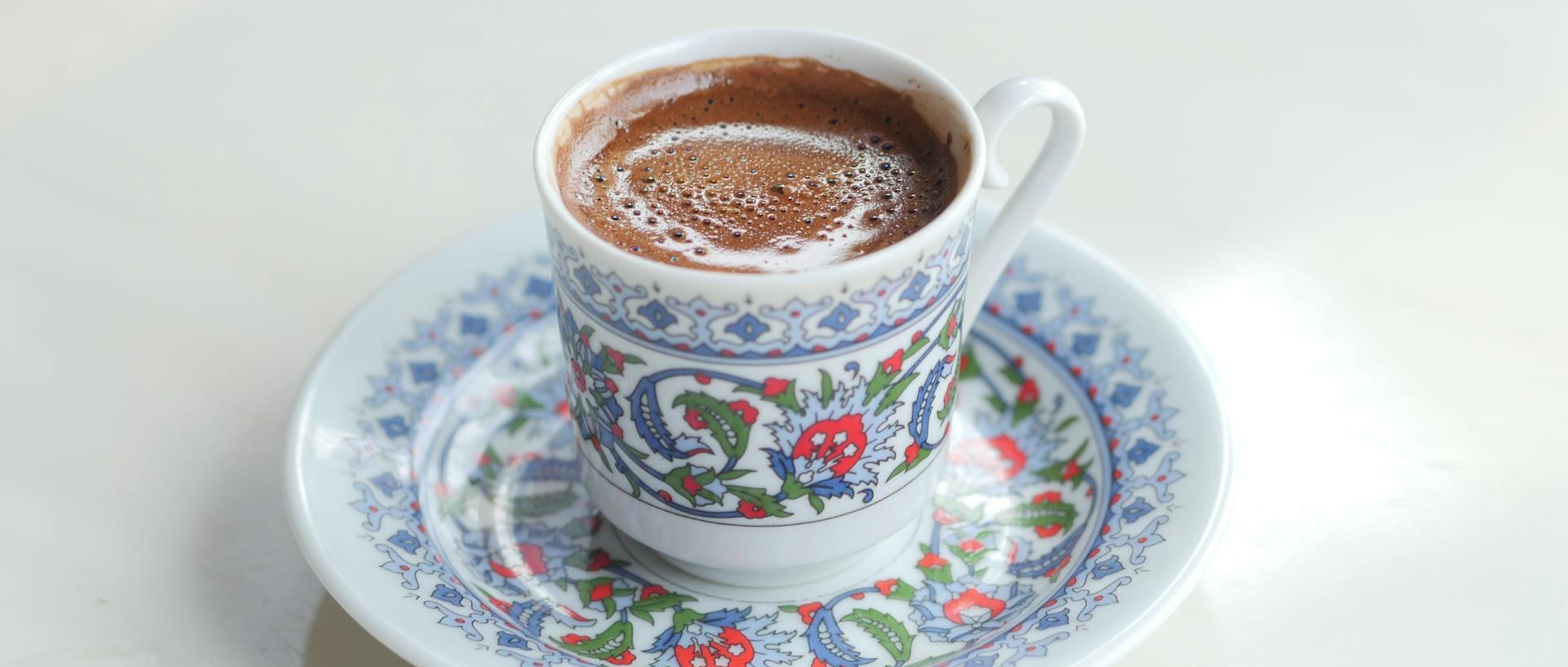
Poured — with grounds — into a small 60–80 ml cup without a handle. Accompanied by a glass of cold water and often a small sweet. Sipped slowly, leaving the last centimetre of liquid (heavy with grounds) in the cup. Never stirred after pouring.
How to prepare
- Measure cold water into the cezve — 60–80 ml per cup. Add 1–2 teaspoons of finely ground coffee and your preferred amount of sugar. Do not stir yet.
- Stir once to wet the grounds, then place over low heat (or into a heated sand tray if available).
- Heat slowly. As the coffee warms, the grounds will rise and form a dark foam on the surface. Do not rush this — low heat over 4–6 minutes builds the foam gradually.
- First foam rise. When the foam is about to overflow, remove from heat. Spoon a small amount of foam into the cup first.
- Return to heat and allow the coffee to rise again. Remove just before the second overflow.
- Pour slowly over the reserved foam. Allow 2–3 minutes for the grounds to settle before drinking.
What to avoid
- Boiling the coffee. A rolling boil destroys the foam structure and produces a bitter, flat cup. The target is just below boiling (~85–90 °C).
- Stirring after the first heat. Once heating begins, stirring disrupts the forming foam layer. Leave it undisturbed.
- Drinking the grounds. The last 10–15 ml of the cup contains the settled grounds. Stop drinking when you feel resistance.
- Fast heat. High heat produces uneven foam and scorches the bottom of the cezve. Low and slow is the only method.
- Coarse grind. Turkish coffee requires a powder-fine grind. Anything coarser prevents the characteristic foam and produces a gritty texture.
Tips
- Sand brewing (if available) distributes heat perfectly evenly and allows the most control. An electric sand tray is a viable home option.
- Copper or brass cezve conducts heat more evenly than stainless steel and is the traditional choice.
- Cardamom can be added to the cezve with the coffee — one crushed pod per cup — for an Arabic-influenced variant.
- Cold water before serving. Offer a glass of cold still water with the coffee. Rinsing the palate between sips cleanses bitterness and is part of the serving tradition.