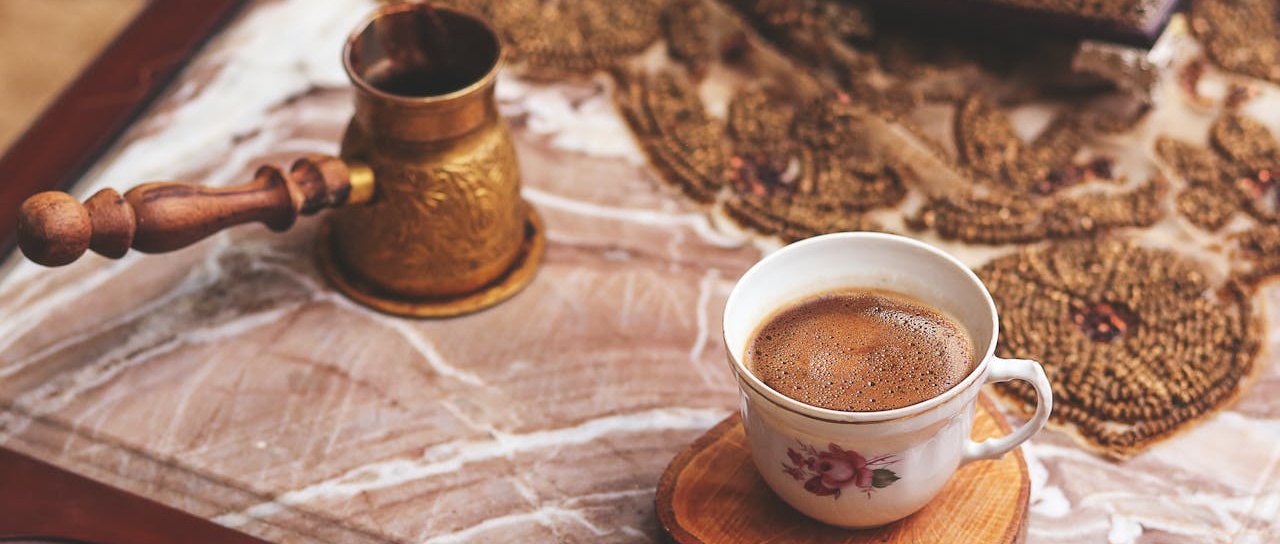
Bosnian coffee shares Ottoman origins with Turkish coffee but diverged during the centuries of Ottoman rule over the Balkans, developing distinct preparation conventions that Bosnians consider superior to the Turkish method. The sugar-on-the-side convention, the sequence of adding grounds after water, and the specific serving set (fildžan, džezva, tepsija) all mark it as a distinct tradition.
Origin and history
Coffee arrived in Bosnia via the Ottoman Empire in the 16th century, when the Bosnian region was a significant Ottoman territory. The kahva (from Arabic qahwa) was prepared in the Turkish manner initially, but Bosnian practice gradually evolved. The specific adaptation — adding coffee to already-hot water rather than cold, and treating sugar as a separate component rather than an additive — likely developed during the 17th or 18th century.
The Bosnian coffee tradition survived the fall of the Ottoman Empire and remains essentially unchanged in domestic and café practice today. It is culturally significant as a symbol of Bosnian identity distinct from both Turkish and Serbian coffee traditions.
Technical structure
- Grind: Very fine — nearly identical to Turkish coffee, a powder consistency.
- Water: Cold water brought to a full boil in the džezva, then removed from heat.
- Coffee addition: Ground coffee (approximately 8–10 g per 100 ml) added to the hot water off heat, then stirred gently to wet the grounds.
- Second heat: Džezva returned to heat until the coffee blooms (rises to a foam) — approximately 30–60 seconds. Removed immediately.
- Resting: Allowed to settle for 1–2 minutes before pouring.
- Sugar: A cube of sugar on the saucer — bitten, not dissolved in the cup.
Serving convention
The Bosnian coffee service uses specific vessels:
- Džezva: Small long-handled pot, copper or brass.
- Fildžan: A small handleless cup, approximately 60–80 ml.
- Tepsija: A small round tray on which the džezva and cup are served together.
- Rahat lokum (Turkish delight) may be served alongside the sugar as a sweetener.
The coffee is poured from the džezva at the table, often leaving the džezva on the tray so the drinker can control the pace of pouring.
Best served as
Poured slowly into the fildžan, drinking the top 80% and leaving the grounds-heavy base in the cup. Consumed with the sugar cube bitten and held in the cheek as the coffee is sipped — a technique that infuses sweetness without dissolving sugar directly into the liquid. Accompanied by still water and often served as a welcome drink to guests.
How to prepare
- Fill the džezva with cold water (approximately 100–120 ml per serving). Bring to a full rolling boil, then remove from heat immediately.
- Add finely ground coffee (8–10 g per 100 ml) to the hot water. Stir briefly to wet the grounds.
- Return to low heat. Watch closely — within 30–60 seconds the coffee will bloom (rise into foam). Remove just before it overflows.
- Rest for 1–2 minutes to allow grounds to settle.
- Pour slowly into the fildžan, holding the džezva upright so it can remain on the table during the rest of the serving.
What to avoid
- Adding coffee to cold water (Turkish method). Bosnian coffee adds grounds to already-boiled water. This difference is central to Bosnian identity and produces a different extraction sequence.
- Stirring after the bloom. The resting period is when grounds settle. Stirring distributes them back through the liquid.
- Drinking all the coffee immediately. Bosnian coffee is served with the džezva alongside — the expectation is a leisurely cup poured in stages over several minutes.
- Too high heat after grounds addition. The second heating after grounds are added should be gentle. High heat scorches the coffee and produces bitterness.
Tips
- Keep the džezva and fildžan warm before serving — rinse with hot water. Cold vessels drop temperature rapidly in the small volumes involved.
- Bite the sugar cube first, then sip the coffee. Do not dissolve it. The slow sweetness release through the cheek is specifically different from dissolved sugar.
- Serve the water alongside. Traditional Bosnian coffee service includes a glass of cold still water, offered as a palate cleanser between sips.