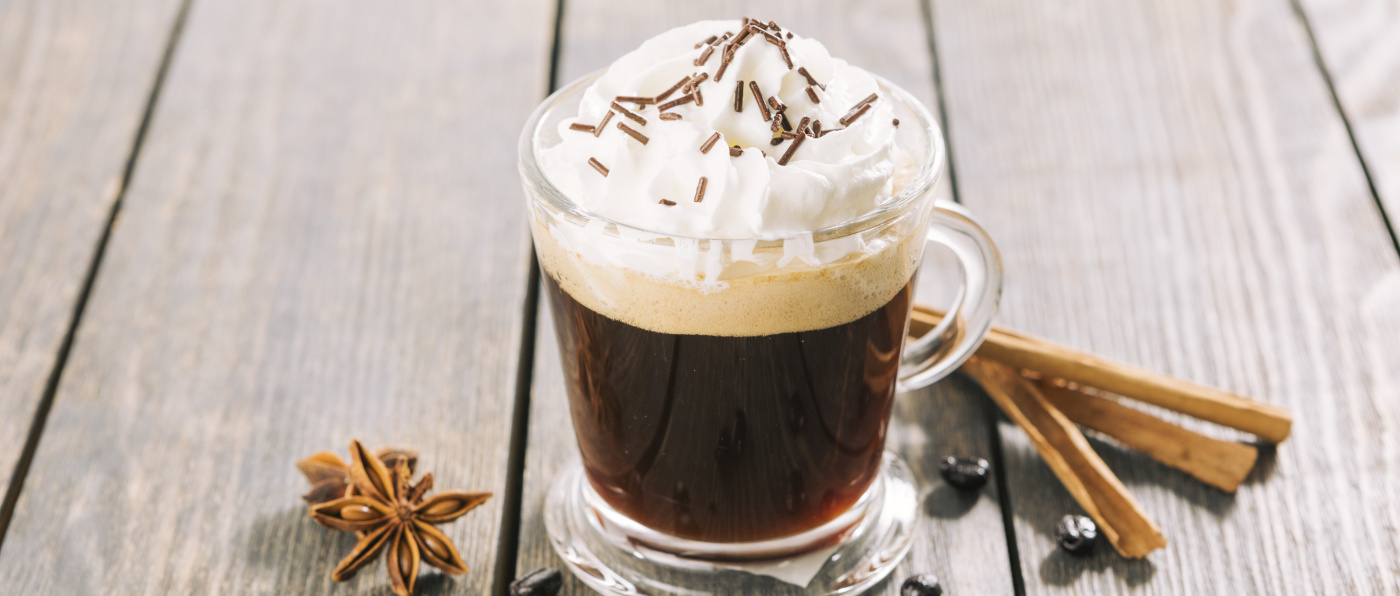
Irish coffee is one of the few canonical coffee cocktails — a category that resists the rules of both coffee preparation and bartending. Its construction requires specific attention to temperature, sugar, and cream density. A correctly made Irish coffee is not coffee with cream on top; it is coffee consumed through cream.
Origin and history
Foynes, County Limerick, was the main transatlantic airbase for flying boats crossing between Europe and North America in the late 1930s and early 1940s. The terminal café, run by Joe Sheridan, served passengers who often arrived or departed in harsh Atlantic weather. In winter 1943, Sheridan added Irish whiskey and brown sugar to coffee and topped it with cream for a group of distressed American passengers. He declined to identify it as Brazilian coffee. The drink was named on that occasion.
Stanton Delaplane, a travel writer for the San Francisco Chronicle, encountered the drink at Shannon Airport in the early 1950s and brought the recipe to the Buena Vista Café in San Francisco, where it was refined and standardised. The Buena Vista still serves hundreds daily.
Technical structure
- Coffee: Strong, freshly brewed hot coffee — filter or French press. 120–150 ml per serving. Espresso diluted to filter strength is used in some modern versions.
- Irish whiskey: 40–50 ml. Traditional choice is Jameson or Tullamore D.E.W. Single malts produce more complex results.
- Sugar: 1–2 teaspoons brown sugar (or demerara), dissolved in the hot coffee before whiskey is added.
- Cream: Lightly whipped to a pourable consistency — not stiff. Poured over an inverted teaspoon to spread across the surface without sinking.
- Glass: Traditional Irish coffee glass (240 ml footed mug) is pre-warmed with hot water.
The floating cream technique
The cream must have a specific density: if over-whipped it sinks through agitation; if under-whipped it disperses immediately. The ideal is cream whipped to a liquid that pours in a single stream and maintains a 1–2 cm layer above the coffee. The drinker does not stir — the pleasure is the contrast of cold cream against hot, sweet whiskey-coffee.
Best served as
Hot, in a pre-warmed glass, consumed immediately. The cream-to-coffee temperature differential dissipates within 5–8 minutes. Best made to order. Not a candidate for batch preparation.
How to prepare
- Pre-warm the glass with boiling water for 30 seconds. Discard.
- Brew strong coffee — approximately 150 ml of filter or French press coffee, double the normal strength. The coffee must be hot.
- Add sugar (1–2 teaspoons brown sugar or demerara) to the hot coffee. Stir until fully dissolved. A grain of undissolved sugar will prevent the cream from floating.
- Add whiskey (40–50 ml) and stir gently once.
- Prepare the cream. Whip cold heavy cream with a hand whisk or electric whisk until it just thickens enough to pour in a single stream without fully dripping. It should be between liquid and soft-peak — liquid enough to pour, thick enough to float.
- Float the cream. Invert a spoon over the coffee and pour the cream over the back of the spoon slowly, from just above the surface. The cream should pool on top.
- Serve immediately, without a straw. The coffee is drunk through the cream.
What to avoid
- Stiff whipped cream. Fully whipped cream sinks through the coffee in a lump or sits as a meringue-like cap. The texture should be just thickened, pourable.
- Stirring after adding cream. The cream is meant to float and be consumed as a temperature and texture contrast with the hot coffee beneath. Stirring collapses this.
- Insufficient sugar. The sugar plays two roles: it sweetens the coffee and slightly increases the density of the liquid layer, helping the cream float. Undersweetening undermines both.
- Using cold coffee. The coffee must be hot enough to fully dissolve the sugar. Cold or lukewarm coffee produces a grainy, sunken result.
Tips
- Aged single malt Irish whiskey (Redbreast, Green Spot, Teeling) produces a more complex result than standard blends. The whiskey flavour is a major component.
- The spoon technique is forgiving with practice. The key is pouring slowly with the cream just thick enough to stay together as a layer.
- A cold glass prevents the cream from floating. Always pre-warm, and consume immediately after assembly.
- Strong coffee is essential. The whiskey and cream are strong flavours — a weak coffee base disappears entirely.