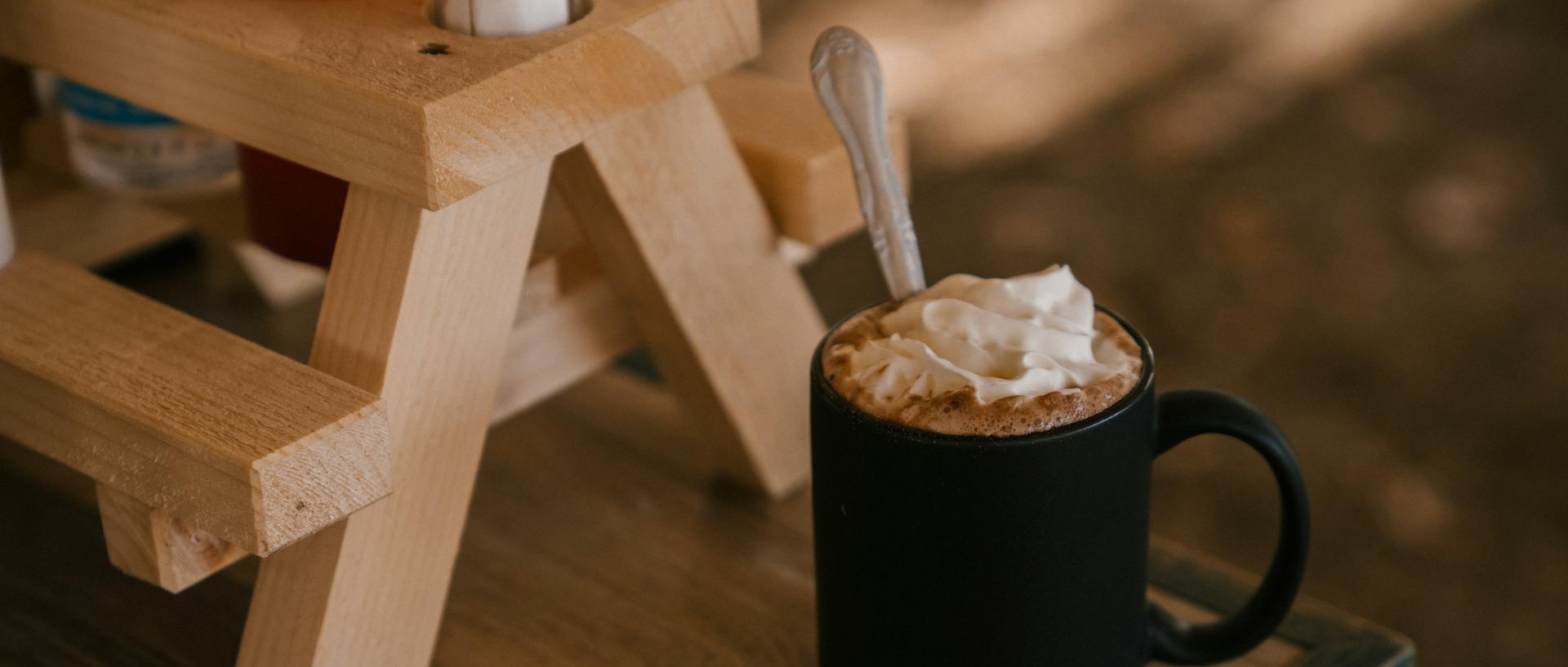
Filter kaapi is a preparation system as much as a recipe. The combination of the specific filter, the chicory-blended coffee, the high-temperature milk aeration, and the steel vessel set produces a drink that cannot be replicated by substituting any element without altering the fundamental character.
Origin and history
Coffee reached India via Yemen in the late 17th century, brought by the Sufi saint Baba Budan, who is said to have smuggled seven coffee beans from Mocha and planted them in the Chikmagalur hills of Karnataka — a region that remains a significant coffee-growing area today.
South Indian filter coffee developed independently of the espresso tradition, shaped instead by the equipment available and the local preference for hot, milky, sweet beverages. The stainless steel percolation filter was developed domestically — a simple and robust design that requires no machinery beyond hot water. Chicory was incorporated into South Indian coffee blends (typically 20–30% chicory) during the British colonial period and the World War II rationing years, and the blended flavour became so standard that a chicory-free kaapi is considered incomplete by many traditional drinkers.
The Indian Coffee House chain, established in 1936, spread filter coffee culture across the country, and regional coffee boards standardised production. The South Indian darshini (standing café) and the domestic kitchen remain the primary contexts for filter kaapi.
The two-part steel filter
- Upper chamber: Perforated base, holds approximately 20–25 g of ground coffee. A press disc (gravity-weighted) rests on the grounds.
- Lower chamber: Collects the decoction, which drips through over 15–30 minutes.
- Decoction yield: 60–80 ml of very concentrated coffee from a single fill.
- Grind: Medium-fine — coarser than espresso, finer than drip. Chicory-blended coffee requires slightly coarser grinding.
Technical structure
- Decoction: 20–25 ml per serving (high concentration — approximately 150 g/L equivalent).
- Milk: Hot, boiled full-fat milk, 60–80 ml. In traditional preparation, milk is brought to a boil and poured at high temperature.
- Sugar: Added to taste — 1–2 teaspoons is standard.
- Aeration: The mixture is poured between the dabarah (wide-lipped metal saucer) and the tumbler (cylindrical cup) from a height of 30–40 cm, 3–5 times, to create a frothy surface and mix the ingredients. This process also cools the drink to a drinkable temperature.
- Vessel: Stainless steel dabarah-tumbler set. The dabarah is used both to cool the coffee and as the sipping vessel — small amounts are poured from tumbler to dabarah and consumed.
Chicory in South Indian coffee
The standard South Indian filter coffee blend is 75–80% arabica/robusta coffee and 20–25% roasted chicory. Chicory adds body, a woody sweetness, and reduces the harshness of the robusta content. Premium blends use less chicory or none; everyday domestic and café blends use more. The chicory note is characteristic and expected — it is part of what makes filter kaapi distinct from other milk-coffee preparations.
Best served as
Hot, in the steel dabarah-tumbler set. The dabarah is both cooler and shallower — designed for sipping at the lip of the vessel without burning the hands. Consumed at breakfast alongside idli and sambar, dosa, or upma. Sugar is not optional in the traditional context — sweetened filter kaapi is the default.
How to prepare
- Load the filter. Place 20–25 g of medium-fine ground chicory-coffee blend into the upper chamber of the stainless steel filter. Add the gravity press disc on top.
- Bloom: Pour 30 ml of near-boiling water (92–95 °C) over the grounds. Wait 30 seconds.
- Fill: Add 120–150 ml of near-boiling water. Place the lid on the filter. Allow to drip for 15–30 minutes into the lower chamber.
- Prepare milk. Bring full-fat milk to a full boil in a saucepan. In South Indian practice, the milk is boiled — not just heated.
- Assemble. Add 1–2 teaspoons of sugar to the tumbler. Add 15–25 ml of decoction (adjust to taste — it is very concentrated). Fill with hot boiled milk.
- Aerate. Pour the coffee from the tumbler into the dabarah and back, from a height of 30–40 cm, 4–5 times. This cools, mixes, and froths the coffee.
- Serve in the dabarah, sipping from the wide lip.
What to avoid
- Grind too coarse. The filter's fine perforations require a medium-fine grind to drip at the correct pace. Too coarse passes through too fast, producing a thin decoction.
- Not boiling the milk. South Indian filter coffee is made with fully boiled milk, not steamed. The cooking of the milk proteins produces a specific texture and sweetness.
- Skipping the aeration pour. The back-and-forth pouring is not decorative — it mixes, cools, and froths the coffee into the characteristic smooth, slightly frothy texture.
- No chicory. Chicory blended coffee is the standard in South India. Pure arabica or robusta without chicory produces a sharper, less rounded result.
Tips
- Control the decoction-to-milk ratio carefully — the decoction is 6–8× the concentration of regular drip coffee. Start with 15 ml and increase to 25 ml per cup as you find your preference.
- The dabarah-tumbler set is inexpensive and available at Indian grocery stores. The wide-lipped dabarah is both a cooling vessel and a drinking cup.
- Keep the decoction warm in a thermos if you've brewed a full filter — the decoction maintains quality for several hours and produces multiple cups from a single fill.
 Chennai, India