Caffè Mocha bridges the divide between coffee and dessert. Its ingredients — espresso, chocolate, and cream — are each highly valued flavour substances independently; combined, they produce something richer than any single component and substantially sweeter than standard espresso-milk drinks.
Origin and history
The port of Mocha (Al-Mukha) on the Red Sea coast of Yemen was one of the most important coffee trading hubs in the world from the 15th to the 18th centuries. All Arabian and most East African coffee exported to Europe passed through Mocha, making the name synonymous with quality coffee across European markets. Yemeni Mocha coffee had a distinctive, naturally chocolatey flavour note — an inherent characteristic of the specific varietals grown there — that was well-documented by 17th and 18th-century European coffee traders.
The term mocha shifted over time from a specific geographic origin to a general flavour descriptor for coffee with chocolate associations. Caffè Mocha as a commercial preparation — espresso plus chocolate plus milk — became established in American coffee culture in the 1980s and 1990s, popularised heavily by the global café chain expansion that defined that era.
Technical structure
- Espresso: 1–2 shots (30–60 ml).
- Chocolate: 15–30 ml chocolate syrup (sweetened, commercial) or 10–15 g dark cocoa powder dissolved in the hot espresso. Dark chocolate ganache (melted with a small amount of hot cream) produces the highest-quality version.
- Steamed milk: 150–200 ml, textured to latte standard — minimal foam, uniformly integrated.
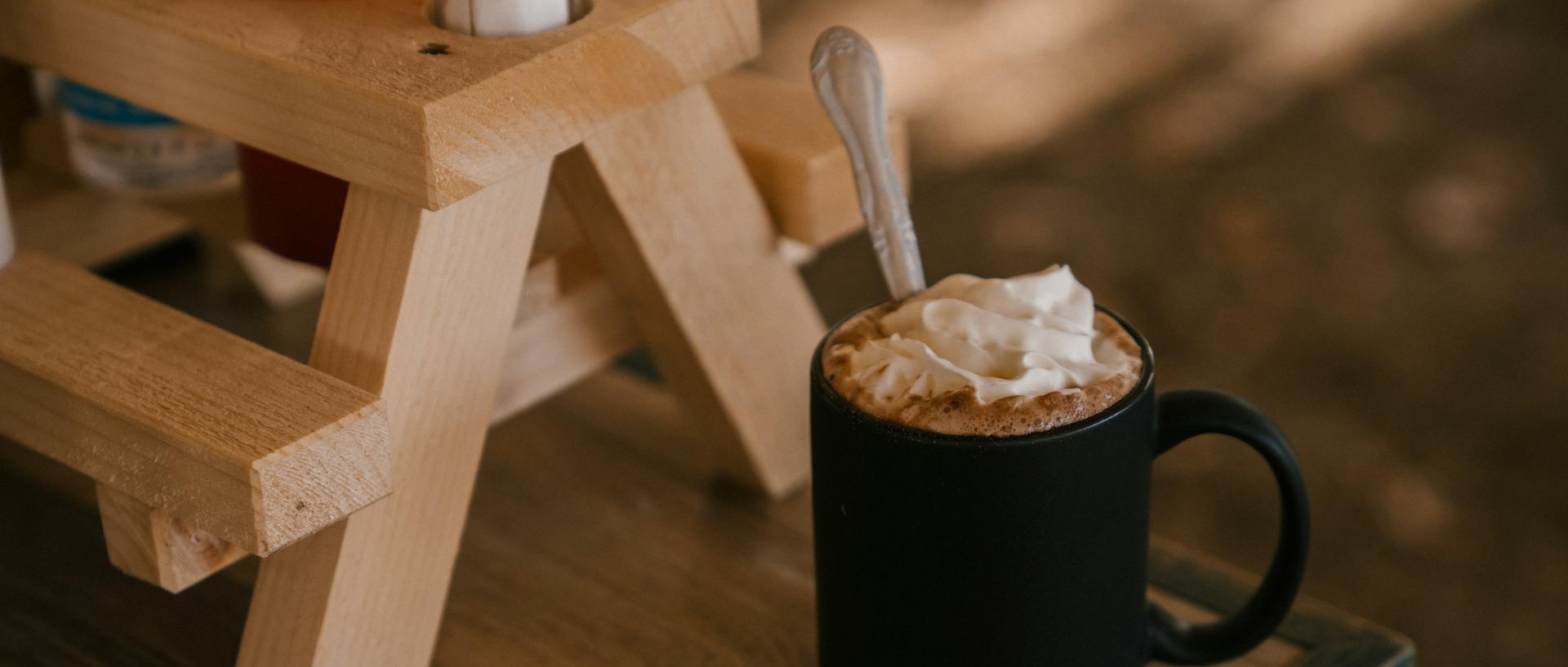
- Whipped cream: Optional topping, traditional in most commercial formats.
- Total volume: 240–360 ml depending on cup size.
Chocolate quality and the mocha spectrum
The flavour range of a caffè mocha is dominated by the chocolate quality more than the espresso quality. A mocha made with commercial chocolate sauce will taste primarily of sugar and synthetic chocolate; one made with a 70% dark chocolate ganache produces a complex, bitter-sweet integration with the espresso. The most serious versions use single-origin cacao.
Structurally, mocha is a latte with chocolate — the milk and espresso proportions are similar. The chocolate addition fundamentally alters the drink: it adds sweetness, body, and aromatic complexity. Mocha is firmly in the dessert-coffee category rather than the precision-espresso category.
Best served as
In a 240–360 ml ceramic cup or glass, with or without whipped cream. Hot or as a mocha frappé (blended iced version). Chocolate powder dusted over the cream is a standard finishing touch. Best made with high-quality dark chocolate and a fresh double espresso.
How to prepare
- Prepare chocolate. For the best result: melt 15–20 g of 60–70% dark chocolate with 1 tablespoon of hot water to form a smooth ganache. Alternatively, use 2 tablespoons of chocolate syrup.
- Pull a double espresso (60 ml) directly into a pre-warmed 300–360 ml cup.
- Add the chocolate to the hot espresso and stir to fully integrate. The heat of the espresso is usually sufficient to melt the ganache.
- Steam 150–200 ml of full-fat milk to 60–65 °C with latte-style microfoam (minimal air, fully integrated texture).
- Pour the milk over the chocolate-espresso base.
- Top with whipped cream and a dusting of cocoa powder or chocolate shavings if desired.
What to avoid
- Cheap chocolate syrup. The mocha's flavour is dominated by the chocolate choice more than the espresso. A high-sugar, low-cocoa commercial syrup produces a candy-flavoured result. Use real chocolate.
- Too much chocolate. The drink should be a coffee with chocolate notes, not a hot chocolate with espresso added. Start with 15–20 g and adjust to taste.
- Using a single espresso for a large cup. A single shot disappears in 300 ml of milk and chocolate. Always use a double.
- Not pre-integrating the chocolate. Chocolate added to milk without first mixing with the hot espresso can remain in separate pools. Mix espresso and chocolate fully before adding milk.
Tips
- Dark chocolate (60–70% cacao) balances the espresso bitterness without excessive sweetness. Milk chocolate produces a sweeter mocha with less complexity.
- Cocoa powder stirred into the espresso is a simple and effective alternative to melted chocolate — use Dutch-process cocoa for a deeper flavour.
- Iced mocha: Prepare the espresso-chocolate base, let it cool briefly, then pour over ice and add cold milk and whipped cream. The chocolate maintains its flavour well in the cold version.