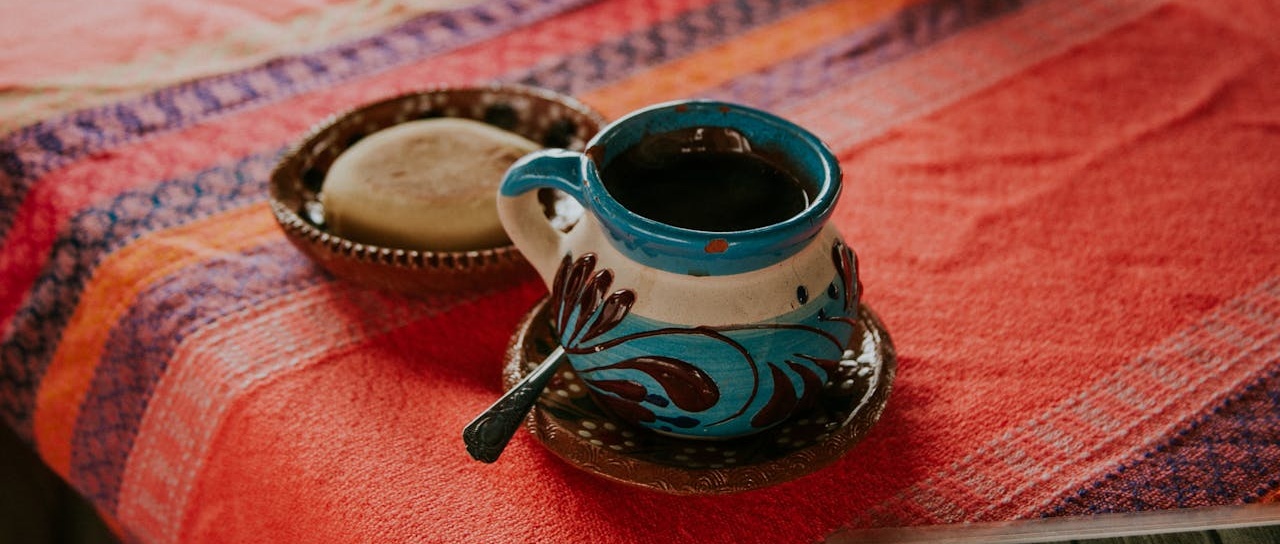
Café de Olla is a beverage shaped by three distinct components: the unrefined sweetness of piloncillo, the warm aromatic character of cinnamon, and the earthy mineral quality of the clay pot. Each element has a counterpart in pre-Columbian and colonial Mexican food culture — the combination is not accidental but a synthesis of indigenous and Spanish culinary traditions.
Origin and history
Coffee was introduced to Mexico by Spanish colonists in the mid-18th century. The method of brewing it in clay pots with available sweeteners and spices emerged organically in rural communities where refined sugar and metal cookware were not always accessible. Piloncillo — the raw, unrefined cone sugar produced by small-scale sugar cane processing — was the practical sweetener of the countryside. Cinnamon (canela) arrived via the Spice Trade through colonial Spain and became deeply embedded in Mexican cooking.
Café de Olla is most closely associated with the Mexican Revolution (1910–1920), when it was prepared in large clay pots over open fires for revolutionary soldiers. This origin story, whether entirely accurate or partly mythologised, has given the drink a strong national character.
Technical structure
- Coffee: Medium-to-dark ground Mexican coffee, approximately 8–10 g per 200 ml of water. Coarser grind than espresso — approximately drip/French press range.
- Piloncillo: 20–30 g per serving (adjust to taste). Added to cold water and dissolved before coffee is added.
- Cinnamon: 1–2 canela (Ceylon cinnamon) sticks per pot. Mexican canela is a softer, more aromatic variety than the Cassia cinnamon common in North America.
- Optional spices: Cloves (2–3), star anise (1 piece), or a small piece of orange zest.
- Clay pot: The olla de barro contributes a mineral note to the flavour — a genuine effect of the porous clay. Metal pots produce a marginally different result.
- Process: Combine water, piloncillo, and spices. Bring to a boil. Add coffee. Reduce heat and simmer 5–8 minutes. Strain into cups.
Piloncillo and the flavour profile
Piloncillo is not simply raw sugar. It contains molasses, mineral residues, and volatile compounds absent in refined sugar that produce a warm, slightly smoky sweetness — closer to dark muscovado or gur than to cane sugar. Its interaction with cinnamon and coffee produces a flavour combination that refined sugar cannot replicate.
Best served as
Hot, strained into a ceramic or clay cup, in the morning or late afternoon. Paired with pan dulce (sweet bread) or tamales. Served at Day of the Dead celebrations and other traditional Mexican occasions. Consumed without milk — the spices and piloncillo are the modifiers.
How to prepare
- Combine cold water and piloncillo in an olla de barro or heavy saucepan. Use approximately 20–30 g of piloncillo per 200 ml of water. Heat over medium until piloncillo is fully dissolved.
- Add cinnamon sticks (1–2 canela sticks) and any optional spices (2–3 cloves, 1 star anise).
- Bring to a gentle boil, then reduce heat.
- Add ground coffee — approximately 8–10 g per 200 ml. Stir once to wet the grounds.
- Simmer on very low heat for 5–8 minutes. Do not boil hard — a gentle simmer extracts flavour without excessive bitterness.
- Remove from heat and rest for 2 minutes to allow grounds to settle.
- Strain through a fine mesh strainer into cups. Serve immediately.
What to avoid
- Refined white sugar. Piloncillo is non-negotiable — its molasses content and raw sweetness are the defining flavour of the drink. White sugar produces a flat result.
- Rolling boil after coffee is added. Hard boiling with the grounds produces excessive bitterness and a harsh cup. Low and slow after the coffee addition.
- Metal pot instead of clay. A clay olla de barro contributes a mineral, earthy note that a metal pot cannot replicate. For authentic flavour, use clay.
- Cassia cinnamon (hard sticks). Café de Olla uses canela — Ceylon or Mexican soft cinnamon, lighter in flavour and more aromatic. Hard Cassia sticks produce a more pungent, slightly medicinal note.
Tips
- Make a large batch. Café de Olla does not scale down elegantly — a full olla (1–1.5 litres) maintains temperature better and develops a richer flavour from a longer infusion.
- Season your clay pot. A new olla de barro should be seasoned with water and sugar before first use to close the pores and prevent leaching.
- Serve in a ceramic cup, not glass — the hot clay aesthetic deserves an equally traditional vessel.