Origins
From the Ethiopian Highlands to Yemen
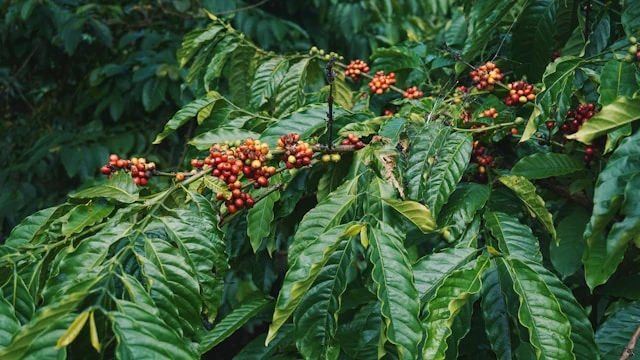
The coffee plant is native to the forests of southwestern Ethiopia, where the fruit was chewed or brewed long before anyone roasted it. By the fifteenth century, cultivation had taken hold in Yemen, and Sufi communities used the drink to stay awake through night prayer. The plant left Africa through the port of Mocha, and the habit followed trade routes north.
Yemen kept the plant close for a while, exporting roasted beans rather than fertile seed. The monopoly did not survive. Seedlings reached Java and the Caribbean, and within two centuries coffee was growing across the tropical belt.
Sixteenth and seventeenth centuries
The Coffee House as a Public Room
Coffee houses appeared in Mecca, Cairo, and Constantinople in the sixteenth century, and within a hundred years they had reached Europe. London's first opened in 1652, and Paris had cafes by the 1670s. These were not quiet rooms. They were places where men read newsletters, argued about prices, and spread rumors faster than any authority could control.
The format carried political risk. A room where strangers talk is a room where complaints spread, which is why coffee houses were watched, licensed, and occasionally closed.
Prohibition
Bans, Taxes, and Patriotic Coffee
Authorities tried to suppress coffee almost as soon as it became popular. Ottoman rulers closed coffee houses in the sixteenth and seventeenth centuries, and Mecca saw an early attempt to outlaw the drink. In Prussia, Frederick the Great spent the 1770s pushing his subjects toward beer and away from coffee, largely to protect state revenue from imported beans.
The American case ran the other way. After the Boston Tea Party in 1773, drinking coffee became a way to boycott tea, and the habit hardened into an identity. A drink can be prohibited, taxed, or promoted, and coffee has been all three.
Nineteenth and twentieth centuries
The Industrial Cup
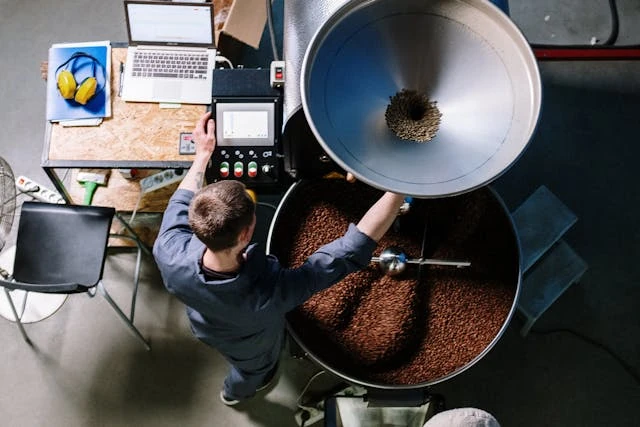
Roasting moved from the kitchen to the factory in the nineteenth century, and packaging followed. Vacuum sealing, introduced commercially around the turn of the twentieth century, let roasted coffee travel without going stale in a week. Instant coffee arrived in several competing forms before Nescafé launched in Switzerland in 1938 and turned it into a global product.
Brewing machines industrialized too. Angelo Moriondo patented a bulk espresso machine in 1884, Luigi Bezzera patented a single serving version in 1901, and Achille Gaggia's piston machine in 1948 pushed water through the puck under pressure and produced the crema that still defines the drink.
The modern cafe
Espresso and the Bar as a Stage
Espresso did not stay in Italy. Italian migrants carried the bar, the grinder, and the short menu to cities in Australia, the United Kingdom, and the United States, and the machine became the visible center of the cafe. By the 1990s the espresso bar was a global format, and the barista had become a job with its own skills and vocabulary.
The result changed how coffee tastes. Milk drinks built on espresso dominate in many markets, which rewards a darker, more soluble roast than the filter traditions of northern Europe and North America.
Third wave
Specialty and the Language of Origin
Specialty coffee grew out of a grading system, a set of competitions, and a generation of buyers who treated origin as a flavor claim. The phrase third wave was in circulation by the early 2000s, used by people such as Trish Rothgeb to describe a market that cared about farm level traceability, light roasts, and brewing as a craft.
That market changed the drink on the counter. Single origin filter coffee, printed roast dates, and public cupping sessions all belong to this period. So does the argument about whether the movement's prices ever reached the farms it celebrates.

Now
What the Cup Carries
Every era sits in the glass you are holding. The plant came from Ethiopia, the brewing method from Yemen, the public room from the Ottoman cities, the machine from Italy, and the language of origin from the last thirty years.
Drinking coffee is a small act of history, repeated every morning.