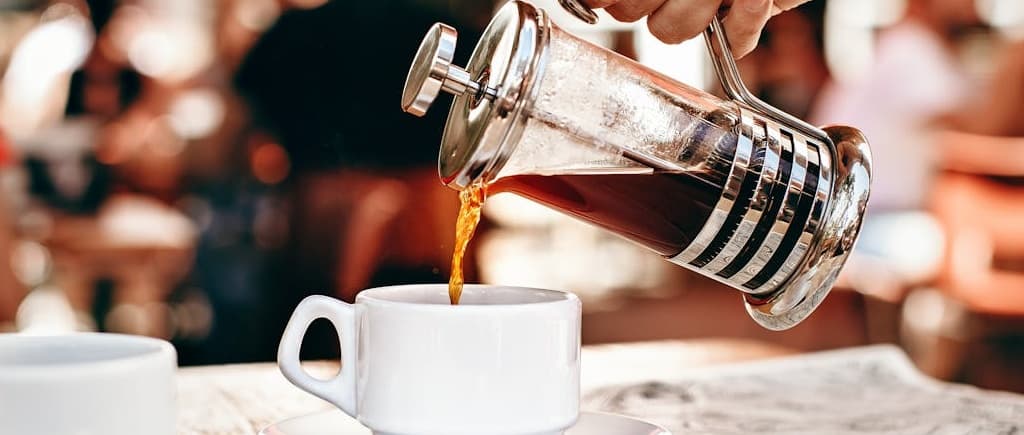
French press (Cafetière)
 France
The French press, also known as cafetière, is a brewing method that originated in the mid-19th century France. Known for its specific design, and versatility for brewing coffee and tea, the French press has mostly become a must-have in coffee society. This brewing technique is known for being one of the most sustainable coffee brewing methods because it is able to produce a good cup of coffee without using any advanced technology. The French press is a loved tool among coffee lovers for its ability to bring out the natural oils and flavors in coffee beans, resulting in a more intense and aromatic coffee experience.
Contents
- Coffee Beans and Caffeine Content of French Press Coffee
- Origin and History of the French Press
- Ingredients of French Press Coffee
- How to Make French Press Coffee
- French Press Variations
- French Press Rules and Brewing Etiquette
- French Press Facts and Trivia
Coffee Beans and Caffeine Content of French Press Coffee
The French press brewing method doesn't have a rule when it comes to the types of beans used. It could be arabica, robusta or both. Also, the same rule applies when it comes to roasts. Dark roast would be for people that perfet rich and intense flavors, and thats what actually made the French press popular. However, others recommend light roast with a high proportion of Arabica to increase the flavor. Coarsely ground beans work best for the French press, they need to be more coarse than drip coffee and have the size of sea salt. As for caffeine content, the French press yields a relatively high amount per serving due to the long brewing time and extraction method. An average 230ml (8-ounce) cup of coffee brewed by a French press will have around 80–100 mg of caffeine, which would be the same amount as a one and a half espresso, however, this will generally depend on the coffee-to-water ratio and the type of beans used.
Origin and History of the French Press
The first French press was invented in the 19th century France, but the design we know today went over several phases until it was perfected. The first big redesign was made in Italy in 1928, and and latest one was in 1958 in France. There are several theories why we call it the French press. One theory why the French press has its name is the country of its latest redesign but another theory is that this coffee has been so popular in cafe's across France that it was named after the country.
Ingredients of French Press Coffee
- 4 cups of water (approximately 100 ml per cup or 3 oz.) - Use filtered or fresh spring water for the best taste. Avoid tap water if it has a strong or metallic taste, because it will impact the flavor of your coffee.
- 8 tablespoons (around 50 grams) of coarse-ground coffee - The grind should resemble the size and texture of sea salt. Use a burr grinder if possible to achieve an even grind.
- Optional: Milk or Cream - For a richer and smoother texture, add milk, cream, or even a plant-based milk after brewing.
- Optional: Sweeteners - Sugar, honey, or simple syrup can balance the coffee’s bitterness for a sweeter cup.
- Optional: Spices - For extra flavor you can add a pinch of cinnamon, nutmeg, or a dash of vanilla extract. These spices can add to the the coffee’s natural notes, creating an holiday feeling aromatic brew.
How to Make French Press Coffee
The French press brewing method takes 4 minutes and involves these steps:
- Coarse-Ground Coffee: Measure about 8 teaspoons of coarse grounds that are the size of sea salt.
- Hot Water: Heat the weather to about 93°C (200°F) and pour it over the grounds, make sure that at least half of French press is covered with water. Start the counter at this point.
- Stir the coffee: After the first minute passes use a wooden spoon and break the top layer, which is called the crust. Give it a good stir.
- Add more hot water: Fill the French press with more hot weather and put the top on.
- Press and Filter: After 4 minutes, push the press down to separate the grounds from the coffee.
- Serve it right away: This is the point where you need to serve it. Pour the coffee right away into cups to avoid the over extraction, because if you let the coffee to sit for too long, it will continue to extract and will become bitter.
Watch this video for a step-by-step guide on how to make French Press Coffee:
French Press Variations
There are several variations on the traditional French press brew, each bringing a unique twist to the classic method:
- Cold Brew French Press: Uses cold water and a 12-24 hour steeping time in the refrigerator for a smooth, refreshing cold brew.
- Tea or Herbal Infusions: A French press can also steep loose-leaf tea, allowing for easy, mess-free tea preparation.
- Infused Water or Herbal Drinks: Many use a French press to infuse water with herbs, fruits, or spices for a flavorful twist on hydration.
French Press Rules and Brewing Etiquette
French press brewing is a precise process, often associated with a few "rules" that will give you the best result. For example, you should avoid using boiled water, which will burn the coffee grounds, instead let it cool down for 30 seconds after boiling. The ideal brewing time is between 4 and 5 minutes, as brewing too long can make the coffee bitter, while under-brewing results in a weak and watery brew.
French Press Facts and Trivia
- Eco-Friendly Brewing: French presses are sustainable because they don’t require electricity, paper filters or plastic pods.
- World Record for Largest French Press Coffee: In 2017, California set a record by brewing over 227 liters (60 gallons) of French press coffee!
- French Press Day: January 28th is celebrated as French Press Day by coffee lovers around the world.